
When your research uncovers something worth sharing, the next step is getting it out there. You’ve found the patterns. You’ve gathered the evidence. Now you need to get it in front of the people it can help… or the people who can help you take it further.
What are the alternatives to a press release?
For many researchers and academics, the obvious route to announce research findings is a press release. It’s familiar, it’s comfortable, it’s expected; and there’s real value in using a format journalists, institutions, funders and professional audiences already understand.
But the familiar can also become forgettable.
When all findings are shared in the same way, everything starts to blur into everything else. When people read press release after press release – all following the same neat structure – even the strongest or most fascinating findings can start to feel like part of the same ever-growing pile.
So it’s time to think differently.
Research communication is changing because the way people consume information has changed.
Sharing your research in a bolder or more unexpected way can feel risky, especially when academia has a strong sense of “this is how we do things”. But sometimes, that small jolt to the system – that touch of the unexpected that wakes people up – is exactly what makes them stop, look, and engage.
What creative ways are there to announce research findings?
There are so many ways to bring research to life, here is our top 5.
1. Video abstract or explainer video

Consider a video abstract or explainer video that helps people understand the heart of a project without asking them to work through dense technical language first.
It works particularly well if something is easier to explain visually than it is through text. Here is a great example from Project SCENe, where they’re able to show their community energy developments and technology behind it.
2. Data visualisations
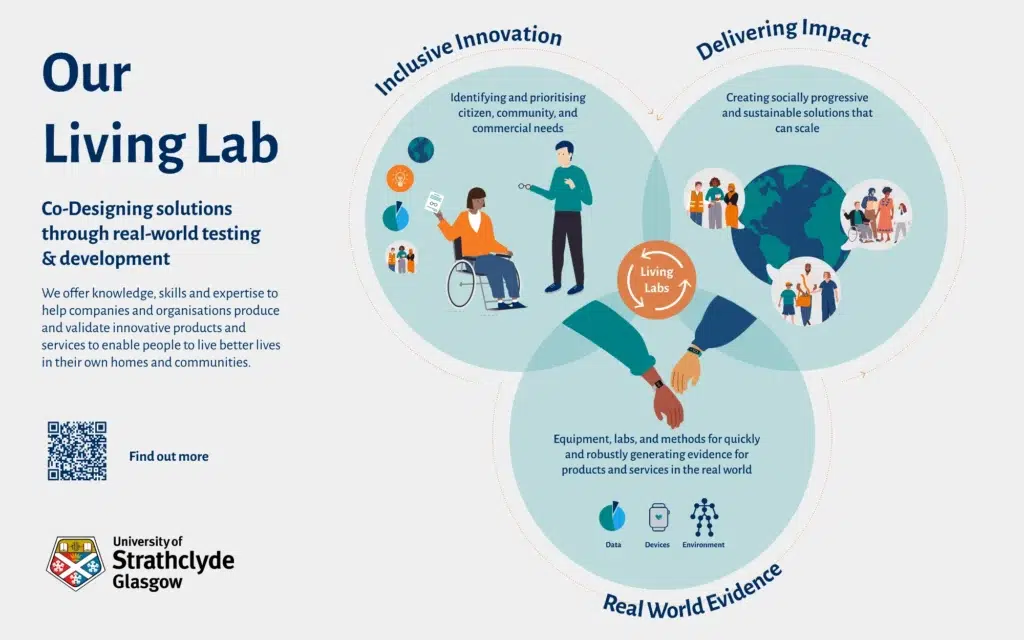
There are also data visualisations that can turn complex results into something people can actually see, explore, and remember.
Here we helped the University of Strathclyde explain how their Living Lab can help companies innovate.
3. Social media
Social media threads and LinkedIn carousels work well, too, breaking down findings into a sequence of clear, useful points.
The Tech Transparency Project uses this to good effect on their Bluesky thread about AI enabling scams, and the Cryoscope Project has produced great LinkedIn carousel about why the cryosphere matters.
4. Interactive timelines
Interactive timelines can be useful when research has developed over time, or when a project connects with policy, public health, historical events, or behavioural change.
The AICE Project explains their pathway formatted as both an infographic and an interactive timeline, which creates an engaging way to explore the project’s structure on all devices.
5. Interview-style videos
Short interview-style videos are becoming increasingly powerful to announce research findings, where personalisation and the people behind the work matter just as much as the work itself. They allow researchers to explain their story in their own words, making the work feel more human without stripping away the underlying message.
Here’s one about how designing websites for research projects has informed our process.
What works best to publicise research outputs?
The important thing to remember is that this isn’t about choosing the trendiest format and hoping for the best. There’s no definite right or wrong choice here, but there may be a right or wrong one for your specific audience.
A policy-focused audience may need clarity, context, and immediate relevance, while a patient group or community audience may need plain language, visualisation, and a clear explanation of why this matters to them.
Academic audiences may still want depth and methodological confidence, but that doesn’t mean they only respond to traditional formats. A clear visual summary or a short video to announce research findings can still help them decide whether they want to explore this further.
Helping good research travel further
Research communication is changing because the way people consume information has changed. Your audience is busy, distracted, and often moving between emails, journals, funding calls, news updates, social media, and endless tabs. If your findings are important – and they are, of course – they deserve more than a single announcement that disappears from the mind after publication day.
Being creative doesn’t mean you’re not taking things seriously. It means you’re respecting the value of the research enough to present it in a way people can actually understand, remember, and use.
This is where Pixelshrink can help.
By translating technical research into thoughtful, accessible content, our mission is to help researchers move their work beyond the expected, and into places where it can make a difference.