
X, formerly known as Twitter, has long been a favourite social network for academics, with the hashtags #AcademicTwitter and #AcademicChatter.
After what could understatedly be described as a turbulent time for X users, many users are wondering what to do and, more pointedly, which Twitter alternative to try in a post-Elon-Musk-owned world. With Musk having unbanned Donald Trump, charging for a blue “verified” checkmark, and its Grok AI spouting dubious content, it is unsurprising that so many in the academic community, especially those frequenting #academia, are looking for a new place to interact with their colleagues.
New forms of social media have been popping up in recent years. These previously niche social networks have suddenly been thrown into the spotlight. Might one of these prove a new home for the academics of X/Twitter?
X alternative 1: BlueSky

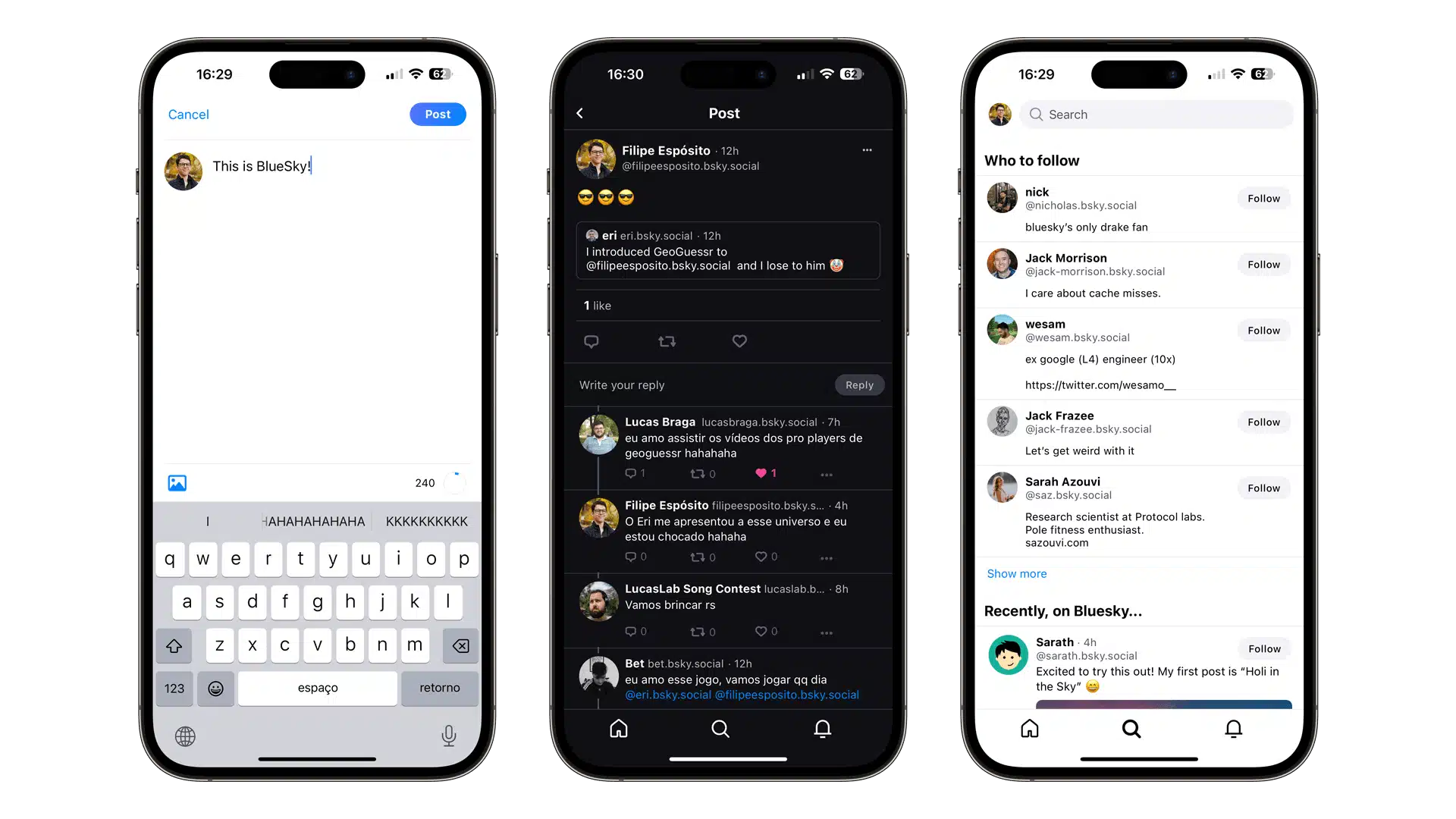
BlueSky was first announced when Jack Dorsey was still CEO of Twitter. Its aim is to build an open foundation for the social internet, so it isn’t all controlled by large corporations. It describes itself as a public-benefit corporation and is open-source, meaning the code it uses is freely available.
It used to be invite-only but now that anyone can open an account, it’s become a main contender to X.
Another game changer is that it has started to support hashtags, making it a worthy alternative to Twitter.
Similarly to Mastodon, they are aiming to create an open network where you can host your own content, so it doesn’t necessarily need to be on their servers (though that’s the easier option).
Your profile name (if they host your account) is in the format @pixelshrink.bsky.social – so like Mastodon, your profile name shows where your profile is hosted as well as your username.
But if you own your own domain name like pixelshrink.com, you can use this to verify your account and make it part of your profile name – so ours becomes https://bsky.app/profile/pixelshrink.com. It doesn’t replace your original profile though, so it’s best to point people to the one that you’re going to be using in the description.
Similar to: Twitter with a touch of Mastodon.
X/Twitter alternative 2: Threads


Founded by Meta, owners of Facebook, WhatsApp and Instagram, Threads is a more text-based offshoot of Instagram that has modelled itself on Twitter.
Now that it’s available in the European Union, you can connect internationally.
They also have introduced a ‘tags’ feature which does the same job as hashtags. You can use an existing one or use the ‘Tag new topic’ feature to add your own, though you can only add one ‘tag’ per post.
Your profile address is in the format @pixelshrink so that’s nice and familiar.
So if you’re happy being in the Meta universe, you may find it reassuring to be using such a familiar interface and well-known social media company.
Similar to: Twitter in its look and feel
X/Twitter alternative 3: Mastodon

Mastodon is both a social network, and a framework to build social networks on.
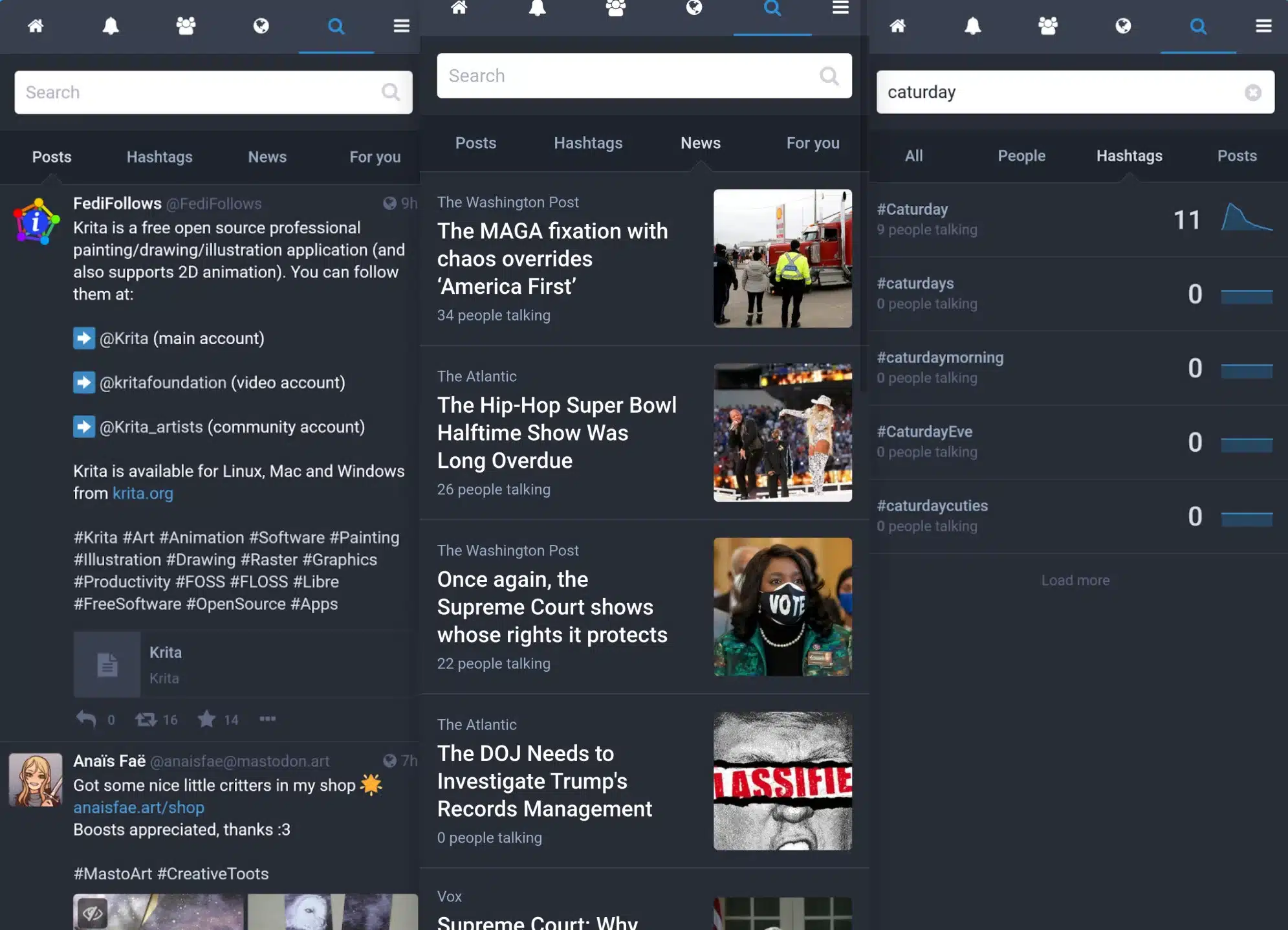
In this way Mastodon is less like Twitter and more like Discord; a framework to set up communities to share content and communicate with. Although migrators from Twitter will surely appreciate the very familiar UI if you decide to use the web version of the service, and there are a whole host of apps, free and paid, to use the service on your smart devices or computers.
Mastodon’s strength is in being very decentralised, yet simultaneously commanding quite a presence online, with 496,000 users. Many more have joined after the fallout with X, and their servers have occasionally got overloaded as a result.
How does Mastodon work?
It’s not all based on one website or server (also known as an ‘instance’). So which server should you sign up to? You’ll be able to access messages from any other server, but it’s worth considering which one might be the best fit, as you’ll have easier access to its messages.
The only problem is, servers can shut down – for example academictalk.org has disappeared. If this happens it will leave you needing to find a new home on Mastodon. The more popular servers are probably a safer bet.
The definitive list of Mastodon instances for academics
Updated 19th May 2026
- You could join the main one, mastodon.social, while you find your way around, though sometimes the bigger servers aren’t accepting new members. Also, in alphabetical order:
- fediverse.au is a home for university and research organisations in Australia
- fediscience.org bills itself as the social network for scientists
- genomic.social is for the Genomic Science Community
- mstdn.science is a place for scientists and science enthusiasts to discuss research and topics surrounding our work
- mastodon.education for everyone who works for and with education (in English and Dutch)
- mathstodon.xyz for maths people – with LaTeX to display formulas
- qoto.org is a Mastodon instance for scholars in Science, Technology, Engineering, and Mathematics (STEM) and all yearning to learn
- scholar.social looks like it would be a good fit as it’s for anyone involved in academia
- scicomm.xyz is for science students, communicators, and enthusiasts … and scientists!
- scientificnetwork.de is made by scientists for scientists – and despite the domain name, posts seem to be mostly in English
- sciences.social welcomes social scientists
- synapse.cafe is for anyone interested in neuroscience, from cell biology to electrophysiology to behavior to clinical applications
- tech.lgbt for folks who are LGBTQIA+ and Allies with an interest in tech work, academics, or technology in general
- vis.social is a community for anyone in SciArt, SciComm, data, visualization, creative coding, and related arts and research
- A wider list is available here
Similar to: A decentralised version of Twitter. One thing to note is that usernames are not centralised, so if you get a username on a particular server (e.g. @[email protected]), someone could register the same name on a different server (e.g. @[email protected]).
Which social network will academics choose?


With everything in flux, everyone is trying out the other social networks to see which one feels like home, and keeping an eye on developments at Twitter.
It’s worth mentioning other options which have fallen by the wayside, such as Tribel (which has closed down) and Counter Social. Both claim to reduce trolling, abuse and fake news, but probably don’t have the resources to back up those lofty ideals. (Counter Social is built on Mastodon’s open-source code, although Mastodon’s founder Eugen Rochko has disavowed CounterSocial).
It’s hard to say where academics who are wanting to migrate from the increasingly troublesome Twitter bubble will find a home. Mastodon has a learning curve and might take some getting used to, and Threads is run by Facebook’s owners, so you’re not escaping the clutches of a major corporation.
We think BlueSky is the one to go for – it’s grown hugely, and with its open source and public benefit ideals, similarity to Twitter and less complicated setup than Mastodon, it’s the best Twitter replacement on balance.
Pixelshrink provides social media support
Whether your project is live or completed, we can keep your social media feeds active, increasing engagement and protecting your project’s legacy. Have a look at the services Pixelshrink Digital Impact provides for academic research projects.